

ECCAS Member States: EU Pledges €6 Million To Boost Women, Youth Entrepreneurship
- Par Kimeng Hilton
- 23 Mar 2026 21:48
- 0 Likes
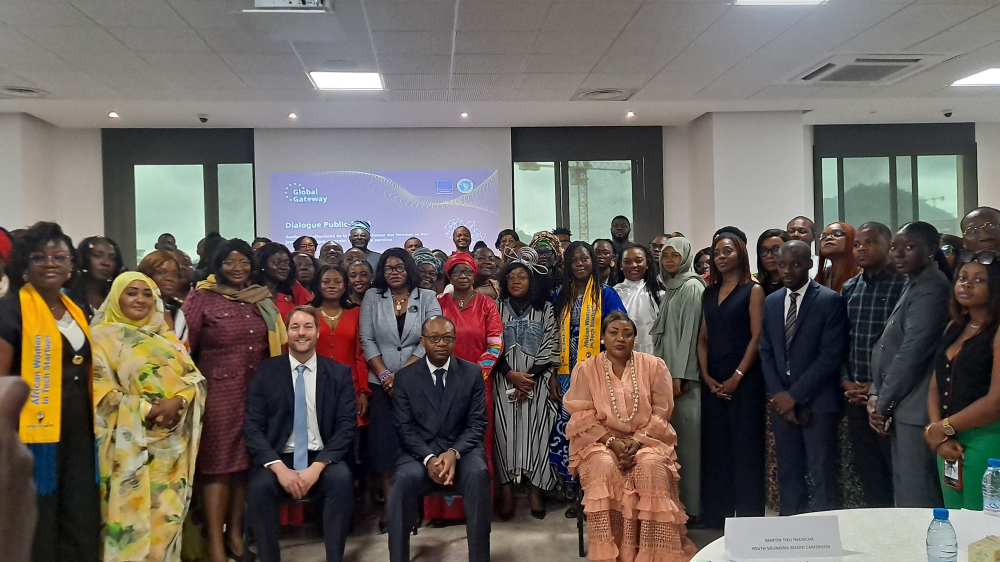
A landmark public-private dialogue to unlock the Africa Continental Free Trade Area, AfCFTA held in the Cameroonian capital, Yaounde on March 23, 2026. With focus on trade services to leverage Africa’s billion-people consumer opportunity.
In a decisive move to harness the economic potential of Central Africa’s demographic dividend, the Minister of Small and Medium-size Enterprises, Social Economy, and Handicraft, Achille Bassilekin III, on Monday, March 23, 2026, inaugurated a landmark public-private dialogue in Yaounde.
The event, titled "Making the AfCFTA Work for Central Africa’s Women and Youth in Trade: Services Sector," serves as a critical precursor to the 14th World Trade Organization (WTO) Ministerial Conference holding in Yaounde from March 26-29, 2026. Aiming to dismantle the barriers stifling the participation of women and young people in the continent’s burgeoning services trade.
Strengthened Collaboration
The dialogue brought together a high-powered coalition of international development partners, regional bodies, and private sector leaders. Organized by the International Trade Centre (ITC) in collaboration with the Economic Community of Central African States (ECCAS), the AfCFTA Secretariat, and Cameroon’s Ministry of SMEs, the gathering marked the launch of a strengthened collaboration designed to translate the lofty ideals of the African Continental Free Trade Area into tangible economic wins for the region's most vulnerable entrepreneurs.
The dialogue was not merely a discussion forum, but the operational kick-off for the European Union-funded "Central Africa: Capacity-building on Trade in Services within the framework of the AfCFTA" programme. With a substantial financial envelope of approximately 6 million Euros dedicated to the region, the initiative seeks to address the chronic underrepresentation of women and youth in intra-African trade by targeting the services sector - specifically tourism, transport, and Information and Communication Technology (ICT).
A Market of Billions
In his opening address, Minister Achille Bassilekin III framed the event within the broader context of Cameroon’s national vision and the continental imperative. Highlighting the vast opportunities presented by the AfCFTA, with a market of over 1.4 billion consumers, the Minister emphasized that Central Africa cannot afford to be left behind.
"Trade services offer huge opportunities for the Central African sub-region," Minister Bassilekin asserted. "There is therefore a need for the sub-region’s women and youth to take advantage of this market."
The Minister’s remarks resonated deeply with the current political climate in Cameroon, noting that President Paul Biya’s seventh term is heavily focused on the empowerment of women and youth. By linking national policy to continental trade frameworks, the government is signaling a strategic pivot toward the services sector as an engine for job creation and economic diversification. Bassilekin also called for a rebalancing of global trade dynamics, stressing the imperative to "diversify trade services between the Global North and Global South," ensuring that African nations move up the value chain and export services rather than just raw materials.
Systemic Barriers To Inclusion
Despite the optimism surrounding the AfCFTA, the path to inclusive trade is fraught with obstacles. Raimund Moser, Chief of the Women, Youth and Vulnerable Communities section at the ITC, laid bare the stark realities facing female and young entrepreneurs in Central Africa.
"There is the issue of funding for small and medium-size businesses, especially businesses run by young people and women. There is also access to the market, access to information," Moser stated. "Especially within the framework of regional integration, the businesses run by women are underrepresented in this trade."
Largely Excluded
Moser’s observations are supported by data suggesting that while women constitute a significant portion of the informal cross-border trade in Africa, they remain largely excluded from the formal, lucrative services trade that the AfCFTA seeks to liberalize. Regulatory hurdles, lack of collateral for credit, and a skills mismatch in high-tech sectors, continue to relegate many women-run enterprises to the micro-level.
The dialogue in Yaounde seeks to confront these challenges head-on. By bringing together policymakers from the Ministries of Trade, Gender, and Youth across ECCAS member states, alongside private sector actors, the event aimed to identify the specific "constraints and priorities" that need to be addressed.
EU’s Partnership, Financial Muscle
A central pillar of this new push is the support from the European Union. According to Sébastien Dibling, Head of EU Cooperation for Cameroon, Gabon, Sao Tome, and Equatorial Guinea, the EU’s is committed to Africa’s economic integration under the Global Gateway initiative.
The financial commitment is significant. Elysée Deumany, the Gender Focal Point at the High Council for Businesses (HCA), revealed that approximately 6 million Euros has been made available to support women and youth in the 11 ECCAS countries. While some might view this sum as modest against the backdrop of continental needs, Deumany was pragmatic.
Better Than Nothing
"It’s better than nothing at all. And with that, we are already going to start implementing the project, to strengthen the capacities of women and young people," she explained. "And of course, we will do the assessment with the buyers."
The funding is expected to be channeled into capacity building, policy advocacy, and the creation of an enabling environment for services trade. The HCA, which acts as the patronage for the private sector in the region, plays a crucial role in ensuring these funds reach the intended beneficiaries and are not get lost in bureaucratic red tape.
Unpacking AfCFTA Protocols
A key component of the day’s agenda was the deep dive into the legal instruments of the AfCFTA. Ms. Gonaya Sethora, Women and Youth in Trade Expert at the AfCFTA Secretariat, led sessions dissecting the Protocol on Trade in Services and the Protocol on Women and Youth in Trade.
Adopted in May 2019, the Protocol on Trade in Services is revolutionary in its scope. It establishes rules for the liberalization of services across four modes: cross-border supply, consumption abroad, commercial presence, and the temporary movement of natural persons. For Central Africa, the priority sectors identified - tourism, transport, financial services, business services, and communication services - align perfectly with the region's competitive advantages.
However, the legal framework is only as good as its implementation. The Protocol on Women and Youth in Trade, adopted in February 2024, goes a step further by explicitly aiming to eliminate discrimination. It mandates that member states build capacities, improve access to opportunities, and support integration into value chains. The dialogue in Yaounde served as a sensitization platform, ensuring that the private sector understands these rights and can demand their enforcement.
From SheTrades To PAPSS
Moving from policy to practice, the afternoon sessions shifted focus to the practical tools available to SMEs. The rollout of ITC’s "SheTrades Outlook" across nine Central African countries was a major talking point. Ms. Awa Caba, International Consultant for the SheTrades Initiative, presented this data-driven policy tool which helps identify gaps in regulation, finance, and skills. By using evidence-based data, governments can be pressured to enact targeted reforms that level the playing field for women.
For the youth, the dialogue highlighted the "Ye! Community," a platform dedicated to enhancing the capacities of young entrepreneurs. In a region where the youth bulge is often viewed as a ticking time bomb, initiatives like Ye! offer a channel for innovation and job creation.
Due Diligence Platform
Financial infrastructure was also on the agenda. Mr. Ibrahim Bagarama, Regional Chief Operating Officer of Afreximbank, introduced participants to the MANSA due diligence platform and the Pan-African Payment and Settlement System (PAPSS). These instruments are critical for solving the currency convertibility issues that have historically hampered intra-African trade. By enabling seamless p...
Cet article complet est réservé aux abonnés
Déjà abonné ? Identifiez-vous >
Accédez en illimité à Cameroon Tribune Digital à partir de 26250 FCFA
Je M'abonne1 minute suffit pour vous abonner à Cameroon Tribune Digital !

- Votre numéro spécial cameroon-tribune en version numérique
- Des encarts
- Des appels d'offres exclusives
- D'avant-première (accès 24h avant la publication)
- Des éditions consultables sur tous supports (smartphone, tablettes, PC)






Commentaires