

Universal Water Access: Cameroon, UNICEF, Unveil 2.4 Trillion FCFA 2030 Roadmap
- Par Kimeng Hilton
- 01 Apr 2026 14:14
- 0 Likes
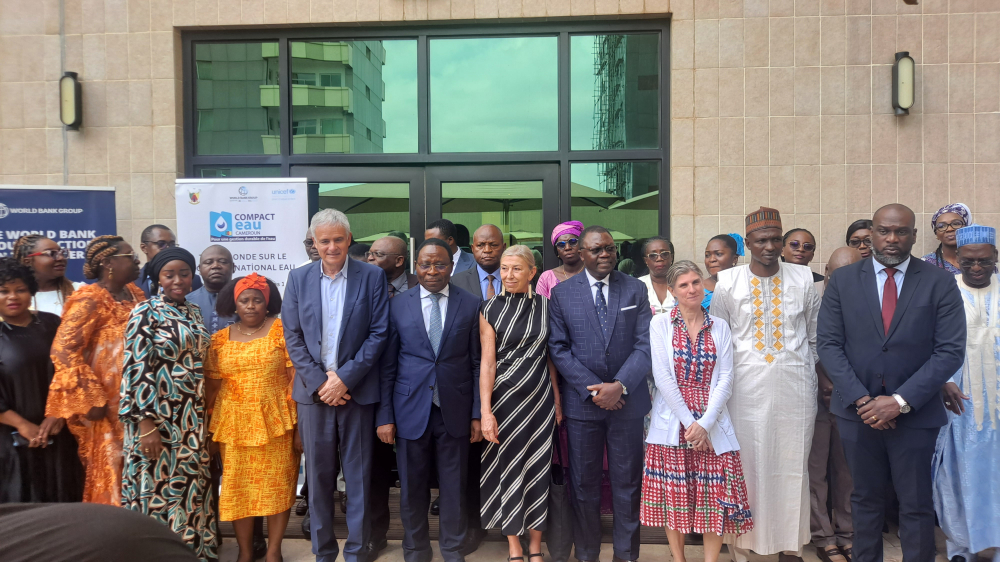
A two-day roundtable opened in Yaounde on April 1, 2026 to validate the $4 billion USD funding that seeks to provide water for 28 million Cameroonians.
The Government of Cameroon, the United Nations Children’s Fund, UNICEF, in partnership with the World Bank, on April 1, 2026, in Yaounde officially launched a high-level roundtable to validate the National Water Compact. The venture worth a monumental 2.4 Trillion FCFA ($4 billion USD) is strategic roadmap designed to transform the nation’s water and sanitation sectors by 2030.
Aligning Behind Unified Vision
The two-day summit, opened and chaired by the Minister of Water Resources and Energy, Gaston Eloundou Essomba, seeks to align international donors, private operators, and local authorities behind a unified vision. The Compact serves as a structural "social contract" aimed at moving Cameroon from fragmented coordination to a results-based governance model.
Funding Gap
The financial stakes of the initiative are significant. Minister Essomba revealed that while 965 billion FCFA have already been secured through the World Bank and other technical partners, a substantial funding gap of 1.431 Trillion FCFA remains. He issued a clear call to action for private and multilateral investors to bridge this deficit, noting that the investment is critical to improving the living conditions of over 27 million people.
A key cornerstone of the project is the "Sea-Wash" initiative, an 11-year programme recently approved by the World Bank with a budget of $800 million. This project is expected to act as a primary engine for the Compact’s goals, focusing on infrastructure resilience and professionalizing sanitation services.
Sector Under Pressure
Despite Cameroon possessing the second-largest hydraulic potential in Sub-Saharan Africa - estimated at 610 billion cubic meters annually - the sector remains under immense pressure. Current statistics highlight a stark urban-rural divide: while 92% of urban households have basic access to water, that figure plummets to 60% in rural areas. Furthermore, nearly 41% of rural water facilities are currently non-functional, and 30% of rural households still practise open defecation.
“It’s Life”
"Water is not just necessary for life; it is life," Minister Essomba stated, quo...
Cet article complet est réservé aux abonnés
Déjà abonné ? Identifiez-vous >
Accédez en illimité à Cameroon Tribune Digital à partir de 26250 FCFA
Je M'abonne1 minute suffit pour vous abonner à Cameroon Tribune Digital !
- Votre numéro spécial cameroon-tribune en version numérique
- Des encarts
- Des appels d'offres exclusives
- D'avant-première (accès 24h avant la publication)
- Des éditions consultables sur tous supports (smartphone, tablettes, PC)






Commentaires