
Building The Future Locally: Architects Propose Adaptable School Prototypes
- Par Kimeng Hilton
- 29 Oct 2026 16:31
- 0 Likes
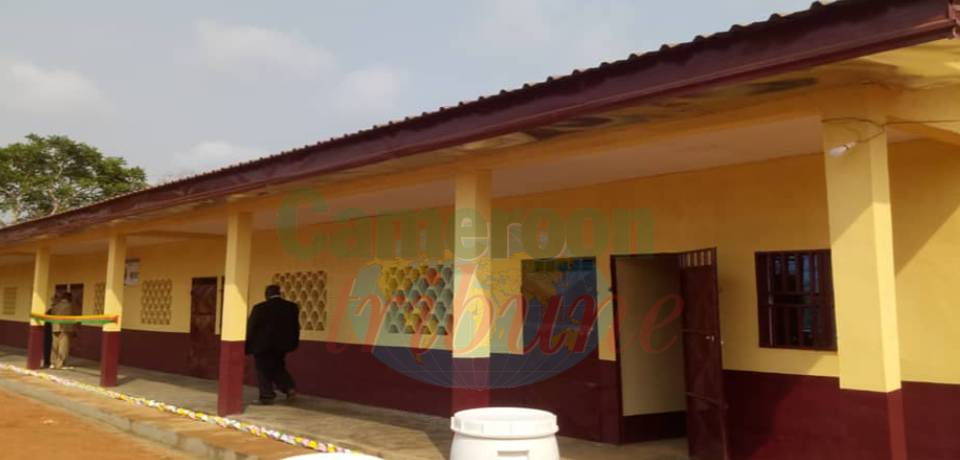
Former architecture students of the Foumban Institute of Fine Arts of the University of Dschang recently organized a conference on how educational facilities are built in Cameroon.
Facing an acute shortage of classrooms, overcrowded learning spaces, and a heavy reliance on makeshift temporary shelters, architectural professionals, students, and community stakeholders are pushing for a radical paradigm shift in how educational facilities are built across Cameroon.
Architects Parley
At its 27th virtual conference held on Saturday, 17 October 2026, the Association of Architects Made in Foumban, AMF LIVE (former architecture students of the Foumban Institute of Fine Arts of the University of Dschang), tackled this pressing national challenge head-on. With the theme, "Architecture and Sustainable Innovation: Bio-based and Recyclable Materials for the Cameroonian School," the Google Meet session moved past mere observation of the crisis. Asking a direct question: Beyond political will, what concrete solutions can architects design, test, and deliver?
Old, New Generations
Led by experienced architect Abdou Manassé, alongside a new generation of trainee architects - Henri Tagne, Lebogo Alexandre, and Nkeng Benjamin - the discussions laid out a comprehensive roadmap. To reshape the future of learning environments across the country's diverse geographic regions.
Reality On The Ground
UNESCO’s 2026 Global Education Monitoring Report highlights that Cameroon's education system continues to face disruptions from security crises, population displacements, and significant equipment and infrastructure gaps. In many regions, children are taught in poorly lit, overheated, or rain-exposed structures, heavily compromising their learning outcomes.
More Than Four Walls, Roof
As the AMF LIVE panel emphasized, a school building is much more than four walls and a roof. True educational infrastructure requires a holistic approach. Encompassing spatial quality, thermal and climatic comfort, cost efficiency, low maintenance, and long-term environmental resilience.
Innovating With Territory
A core takeaway from Talk 27 is the transition toward building with what is already available locally. Rather than importing costly foreign technologies, the association advocates leveraging local bio-based, geo-based, and recyclable resources.
Earth-Based Solutions:
Earth remains heavily relevant across Cameroon. Projects like the "Terre activée" initiative - led by HEPIA in partnership with the University of Yaoundé 1 - are pioneering low-carbon binders using excavated construction soil mixed with green waste to stabilize local soils. While minimizing cement consumption. Compressed Earth Blocks, CEBs and raw earth structures offer exceptional thermal mass suited to local climates.
Recycled, Bio-Based Materials:
Transforming plastic waste into durable construction components, alongside utilizing sustainably managed timber, bamboo, straw, and agricultural by-products, offers a circular approach to building.
Overcoming Hurdles:
Citing insights from the Local Materials Promotion Mission, MIPROMALO, the panel acknowledged that scaling these solutions requires overcoming historical social stigmas that label local materials as "inferior." Alongside tackling shortages in skilled artisanal labour, limited industrialization gaps, and financing hurdles.
Cet article complet est réservé aux abonnés
Déjà abonné ? Identifiez-vous >
Accédez en illimité à Cameroon Tribune Digital à partir de 26250 FCFA
Je M'abonne1 minute suffit pour vous abonner à Cameroon Tribune Digital !
- Votre numéro spécial cameroon-tribune en version numérique
- Des encarts
- Des appels d'offres exclusives
- D'avant-première (accès 24h avant la publication)
- Des éditions consultables sur tous supports (smartphone, tablettes, PC)






Commentaires