

Cultivating Stability, Sustainability: Partners Unite To Secure Food Futures In The North West
- Par Kimeng Hilton
- 07 Mar 2026 23:06
- 0 Likes
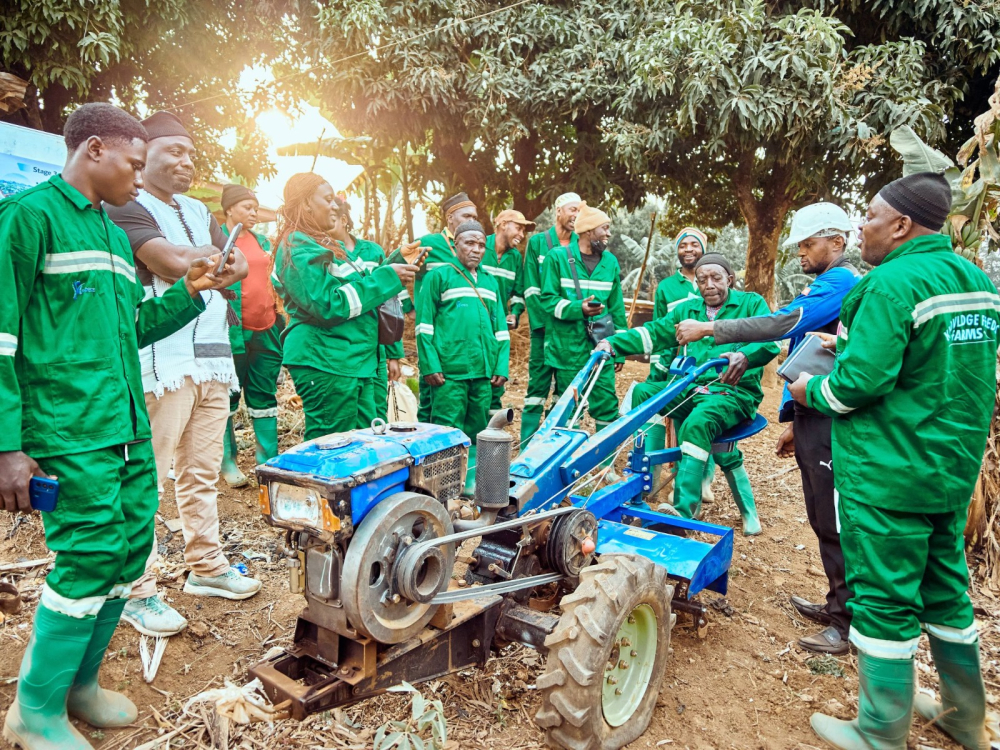
Hope for a Better Future, H4BF and the Support Project for the Development of Secondary Education and Skills for Growth and Employment, PADESCE, have trained the first cohort of climate-smart potato producers.
In the verdant, rolling highlands of the North West Region of Cameroon, the earth tells a story of duality. It is a story of immense fertility, where the soil is rich enough to produce gold-standard potatoes that feed families and fuel economies across the nation. Yet, it is also a story of fragility, where the stability of the land is shaken by the volatility of the climate and the deeper, scarier tremors of a protracted socio-political crisis.
More Than A Profession
For the farming communities of Awing and Santa in Mezam Division, agriculture is more than a profession; it is a lifeline. It is the primary buffer against hunger and the only available savings account for a rural population navigating uncertain times. However, in recent years, this lifeline has been stretched to its breaking point. Disrupted markets have severed the link between the grower and the consumer, while the disappearance of traditional extension services has left farmers to battle a changing climate and evolving pests in isolation.
With World Bank Financing
It is against this backdrop of challenge and necessity that a quiet but powerful revolution took place between May 16 and May 21, 2025. Hope for a Better Future, H4BF, in partnership with the Ministry of Employment and Vocational Training, MINEFOP and funded by the World Bank under the Support Project for the Development of Secondary Education and Skills for Growth and Employment, PADESCE project, launched a decisive intervention. They gathered 32 farmers from the Awing United Friends Farming Simplified Cooperative Society Limited for a comprehensive Start-Up Training on Climate-Smart Potato Production.
This was not merely a transfer of knowledge; it was an act of resilience. It was a statement that even in the midst of crisis, development does not have to stop - it must simply adapt.
The Crisis On The Farm
To understand the magnitude of this training, one must first understand the gravity of the situation on the ground. The North West Region has long been the breadbasket of Cameroon, but the ongoing armed conflict has turned farming into a high-stakes gamble.
When a region is engulfed in instability, the first systems to collapse are the essentials: food security, income generation, and social stability. For the smallholder farmers of Awing, this has manifested in terrifying ways. Roads that once transported tonnes of Irish potatoes to markets in Douala and Yaounde are often unsafe or impassable. The cost of inputs - fertilizers, fungicides, quality seeds - has skyrocketed, while the purchasing power of local community people has plummeted.
The Reality Of Climate Change
Perhaps most insidious is the silent creep of environmental degradation. Climate change is no longer a distant theoretical concept discussed in global summits; it is a daily reality in the fields. Unpredictable rainfall patterns, prolonged dry spells, and new virulent strains of pests are decimating harvests. Many farmers in the region still rely on traditional methods - techniques passed down through generations that were designed for a climate that no longer exists.
The result is a vicious cycle: low yields lead to reduced income, the inability to invest in better inputs or technologies, and even lower yields. Breaking this cycle requires an external shock - a spark of knowledge and resources that can reset the system.
Flexible Response To Mobility Constraints
The logistics of the training itself offered a masterclass in adaptive programming. Originally, the plan was to host the entire event in Santa. However, in a region where security checkpoints and mobility restrictions can change overnight, rigid plans are often the first to fail.
Recognizing the risks to participants, H4BF pivoted. They adopted a flexible, hybrid delivery model designed to maximize safety without compromising on the quality of education. The theoretical sessions were anchored at the Pastoral Centre in Up Station, Bamenda - a secure, central location accessible to all participants. Here, the farmers gathered in a classroom setting, laying the cognitive groundwork for the weeks ahead.
Hands-On Training
But agriculture is learned best with hands in the dirt, not eyes on a whiteboard. To ensure the practical component remained robust, H4BF utilized two strategic field locations: the H4BF Demonstration Farm in Banche, Up Station, Santa and the cooperative’s own farmland in Awing.
This strategic decentralization had a dual benefit. First, it minimized the need for mass movement, reducing the exposure of farmers to travel-related risks.
Second, by mobilizing expert trainers located within or near the cooperative’s operational area, H4BF ensured that the farmers were trained by people who understood the local terrain intimately. This proximity allowed for close supervision and hands-on coaching, fostering a sense of trust and camaraderie that is essential for adult learning.
Decoding The Potato
The curriculum was ambitious, covering the entire lifecycle of the potato crop. But the focus went beyond just "how to grow"; it delved into "how to grow smartly."
The training began by reframing the potato itself. For many in the room, the potato was just a crop they had always planted. The trainers repositioned it as a high-value commodity with immense market potential - a critical driver of both food security and financial liquidity. By understanding the market opportunities, farmers could begin to view their fields not just as gardens, but as business enterprises. The core modules were a blend of time-honored wisdom and cutting-edge agricultural science.
Activities, Requirements
Soil and Land: The farmers dove deep into the science of soil preparation. In the highlands, waterlogging is a silent killer of potato crops. The trainers emphasized the critical importance of drainage, ridge formation, and soil fertility management. Farmers learned that the angle of a ridge could mean the difference between a bumper harvest and a field of rotting tubers.
Planting process precision: The training moved away from the "scatter and hope" method to a calculated approach to planting. Participants learned the intricacies of seed selection - identifying the best tubers for planting, understanding the importance of depth to prevent green-back or exposure to pests, and mastering spacing to ensure each plant had enough room to thrive without competing for nutrients.
Managing Pest, Disease
Defending the harvest: Perhaps the most urgent component of the training was Integrated Pest and Disease Management, IPDM. In a humid climate like the North West Region of Cameroon, pests and fungi can devastate a crop in days. The farmers were trained in prevention, monitoring, and safe response options.
They learned to scout their fields, reading the leaves like a text book, identifying early warning signs of blight or beetle attacks before they spiraled out of control. This proactive approach reduces the reliance on expensive chemical pesticides, saving money and protecting the delicate ecosystem of the soil.
When Adaptation Becomes Obligatory
Climate-smart adaptation: Woven through every module was the golden thread of climate-smart agriculture. Farmers practiced mulching techniques to retain soil moisture during dry spells and learned crop rotation strategies to maintain soil health. They explored how to adapt their planting calendars to align with shifting weather patterns. These were not just tips; they were survival strategies for a warming world.
Women And Confidence
The demographic makeup of the training cohort was significant. Of the 32 participants, 10 were women. In Cameroonian agriculture, women bear the brunt of the labor - weeding, harvesting, and marketing - yet they are often excluded from technical training and land ownership decisions.
By actively including women, H4BF ensured that the knowledge reached the true backbone of the rural economy. The women in attendance brought a unique perspective to the practical sessions, asking sharp questions about market access and storage, issues that directly affect the household management of the harvest.
Greatly Appreciated
The impact of the training was visible in the posture of the participants. On day one, there was a palpable sense of anxiety, a weight carried from the fields and the insecurity of the region. By the final day, the atmosphere had shifted to one of quiet confidence.
The statistics speak for themselves: there was a 100% completion rate. All 32 farmers stuck with the programme, a testament to its relevance and engagement. But the numbers go deeper. At the end of the practical assessment, 28 participants met the core competency requirements, demonstrating a solid grasp of the techniques. Four participants were identified as needing additional support, specifically in spacing consistency and record-keeping.
Rather than viewing these four as failures, the programme viewed them as candidates for targeted coaching - a demonstration that the goal was long-term mastery, not just short-term certification.
Voices From The Field
The feedback from the farmers was the most telling metric of success. They did not just appreciate the training; they hungered for it. "The hands-on structure changed everything," one participant noted during the evaluation. "In the past, we were told what to do, but we never saw it done. Here, we touched the soil, we spaced the seeds, we felt the difference."
More Field Practice, Please!
The farmers also articulated their needs clearly, showing that they were now thinking strategically about their businesses. Their requests were threefold: more time for field practice to refine their motor skills, more certified seed samples to trial these new techniques at home, and crucially, follow-up visits during the next crop cycle.
This last request is perhaps the most significant. It highlights a common failure in development projects: the "one-off" training. Awing farmers know that a week of training is not a silver bullet. They know that when the rains come an...
Cet article complet est réservé aux abonnés
Déjà abonné ? Identifiez-vous >
Accédez en illimité à Cameroon Tribune Digital à partir de 26250 FCFA
Je M'abonne1 minute suffit pour vous abonner à Cameroon Tribune Digital !

- Votre numéro spécial cameroon-tribune en version numérique
- Des encarts
- Des appels d'offres exclusives
- D'avant-première (accès 24h avant la publication)
- Des éditions consultables sur tous supports (smartphone, tablettes, PC)








Commentaires