

“Statement Of Irretrievable Breakdown Is Now Enough For Divorce”
- Par Kimeng Hilton
- 21 Sep 2026 21:49
- 0 Likes
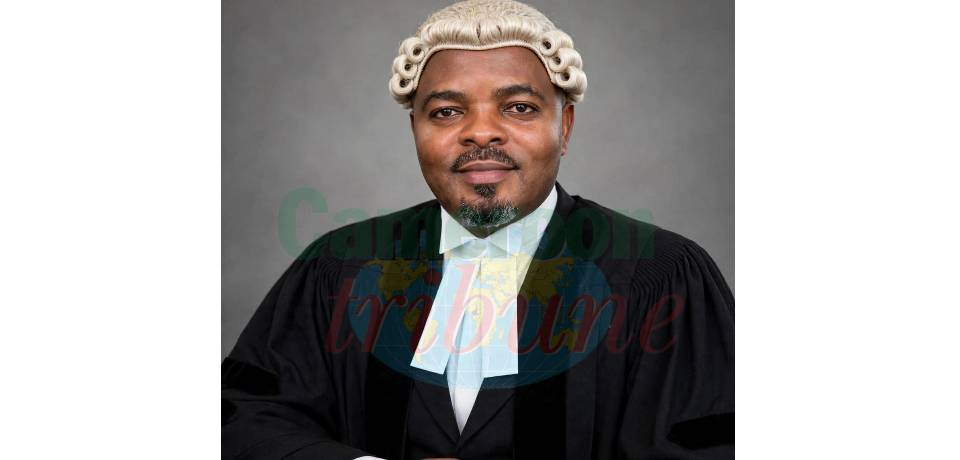
Nfor Dieudonne Nkeh, Esquire, Barrister and Solicitor of the Supreme Courts of Nigeria and Cameroon, based in Buea.
Until now, what was the law that applied in the event of divorce in the two English-speaking regions of Cameroon?
English-speaking Regions of Cameroon: In the North West and South West Regions, the applicable law is Section 11 of the Southern Cameroons High Court Law 1955 (SCHL 1955). This is our reception statute. It provides that the High Court shall apply the Common Law, Doctrines of Equity, and Statutes of General Application in force in England on 1st January 1900, as far as local circumstances permit.
For divorce, by judicial interpretation, our courts imported the Matrimonial Causes Act 1973 (MCA 1973) of England, which replaced earlier statutes. Under MCA 1973, you could only get divorce on one ground - irretrievable breakdown of marriage. But you must prove it with one of five facts: adultery by respondent; unreasonable behaviour; desertion for two years; two-year separation with consent, and five-year separation without consent. This forced blame. Even if both parties wanted peaceful exit, one must accuse the other.
French-speaking Cameroon: In the eight other regions of Cameroon, they apply the Civil Code (Code Civile) 1804 French Civil Code (Code Napoléon) as it stood at independence, plus subsequent local amendments. Divorce is under Articles 229-310 of the Civil Code. Grounds for divorce include adultery; excess, cruelty, grave injury; criminal conviction; mutual consent (divorce par consentement mutuel).
The procedure for divorce is more inquisitorial, with a strong role for the President of the Court in conciliation, and there is no reception of English Law. So Cameroon has had two different divorce regimes since reunification – which is a major legal anomaly.
"No-fault Divorce Law” has started being enforced in some jurisdictions in English-speaking Cameroon. What does the law entail?
The new law is the English Divorce, Dissolution and Separation Act 2020 (DDSA 2020) otherwise referred to as No-Fault Divorce Law, which came into force in England on 6th April 2022. It is not a completely new divorce law per se. Rather, it is a sweeping amendment to the MCA 1973. It amended sections 1-5 of MCA 1973.
Under the law, one ground for divorce of MCA 1973 is retained - irretrievable breakdown of marriage. The five former grounds for divorce are abolished. This means you no longer need to prove adultery or unreasonable behaviour. You simply file a Statement of Irretrievable Breakdown. The court must take that statement as conclusive evidence.
Also under the new law, spouses can jointly apply for divorce. The respondent cannot contest the divorce on grounds that marriage has not broken down. They can only challenge the jurisdiction, validity of marriage, or fraud. The law introduces new terminology. Decree Nisi becomes Conditional Order, and Decree Absolute becomes Final Order. Concerning the minimum timeframe, it is 20 weeks from application to Conditional Order (reflection period), plus six weeks to Final Order = 26 weeks minimum (∼6 months).
Why is the English Divorce, Dissolution and Separation Act 2020 (DDSA 2020) being enforced in North West and South West Regions?
The reason is the Southern Cameroons High Court Law 1955 (SCHL 1955) Section 11. Cameroon law says we apply current English law on this subject. When England amends MCA 1973, the amendment automatically becomes part of Cameroon law, provided it is not repugnant to natural justice, equity, good conscience, or incompatible with local circumstances.
Which jurisdiction first enforced DDSA 2020 in English-speaking Cameroon?
Unofficially, Fako High Court (Buea) was the first to enforce it in early 2024 when a judge accepted a sole application for divorce with just a statement, without requiring particulars of unreasonable behaviour. Kumba (Meme) and Mamfe (Manyu) High Courts followed. Bamenda High Court (Mezam) is more conservative as some judges still demand the five facts for divorce, but recent filings for divorce in 2025 show acceptance.
It should however be noted that there is no Supreme Court of Cameroon decision yet in confirming DDSA 2020. So, it is still judge-driven reception. However, all the divorce rulings under DDSA 2020 so far by the High Courts in English-speaking Cameroon remain law until successfully challenged to the highest court of the land (the Supreme Court of Cameroon).
Which jurisdictions are currently enforcing DDSA 2020? And why not all of the jurisdictions in the North West and South West Regions?
The judicial jurisdictions currently enforcing/accepting DDSA 2020 are Fako (Buea), Meme (Kumba, partially), Manyu (Mamfe), and some judges in Mezam. The law is not yet effective everywhere because there is no formal circular. The Chief Justice of Cameroon has not issued a Practice Direction. Secondly, some judges say DDSA 2020 is after the 1900 cut-off and should not apply. But they ignore that MCA 1973 itself is after 1900 and was received by judicial practice.
Moreover, DDSA 2020 also applies to same-sex marriages/dissolution of same-sex marriage in England. Judges fear that receiving it means receiving same-sex marriage. But legally, we can receive it with severance - that is, apply the heterosexual part and reject the same-sex part as repugnant to Section 347 of the Cameroon Penal Code. Lastly, many court registrars still have old MCA 1973 forms asking for "particulars of adultery/behaviour."
To what extent can DDSA 2020 be enforced in English-speaking Cameroon?
It can be enforced to the extent that it amends MCA 1973 procedure for dissolution, but with Cameroonian public policy filters. It is applicable with the statement procedure, joint application, non-contestability, 26-week timeline. DDSA 2020 is however not applicable in provisions relating to same-sex marriages and civil partnerships. Property, custody and maintenance are still governed by MCA 1973 Sections 21-25, and local customary considerations. The one-year bar remains. You cannot file for divorce within one year of marriage as Section 3 MCA 1973 remains.
Will DDSA 20 not lead to a hike in divorce filings?
In the short term, yes, with a slight increase in divorce filings. England saw a 12% increase in divorce filings after April 2022 when the law came into effect. Why? Because many people were trapped in dead marriages, but feared the shame of blaming their spouses publicly.
In the long term, the law will instead stabilize marriages in English-speaking Cameroon. Evidence from the United Kingdom and Australia (which adopted No-fault Divorce in 1975) shows divorce rates level off after two to three years. No-fault Divorce Law does not create unhappy marriages; it just provides dignified exit for already broken ones. In Cameroon, the divorce rate is artificially low because of cost, shame, and the blame requirement. No-fault Divorce Law may reveal the true rate.
What therefore has changed with the advent of the English Divorce, Dissolution and Separation Act 2020 (DDSA 2020)?
Under the old divorce law MCA 1973 and the new divorce law DDSA 2020 as received, one must prove one of five facts – which is the file statement. You must not necessarily blame your spouse for some reason before filing for divorce. The two spouses can now jointly file for divorce… One can secure divorce now in two to four months if undefended. Or it takes a minimum of six months with built-in reflection. The procedure is less adversarial, less acrimonious and child-focused.
As things stand, where do we go from here?
We need Supreme Court guidance by testing a case to Supreme Court to settle the reception debate.
Cet article complet est réservé aux abonnés
Déjà abonné ? Identifiez-vous >
Accédez en illimité à Cameroon Tribune Digital à partir de 26250 FCFA
Je M'abonne1 minute suffit pour vous abonner à Cameroon Tribune Digital !

- Votre numéro spécial cameroon-tribune en version numérique
- Des encarts
- Des appels d'offres exclusives
- D'avant-première (accès 24h avant la publication)
- Des éditions consultables sur tous supports (smartphone, tablettes, PC)


Reactions
De la meme catégorie

Vol de mototaxis: Interpellés grâce au Gps
- 13 Oct 2026 12:13
- 0 likes






Commentaires