

Arms Sale To Taiwan Region: China Imposes Sweeping Sanctions On 20 US Defence Firms
- Par Kimeng Hilton
- 28 Dec 2025 14:28
- 0 Likes
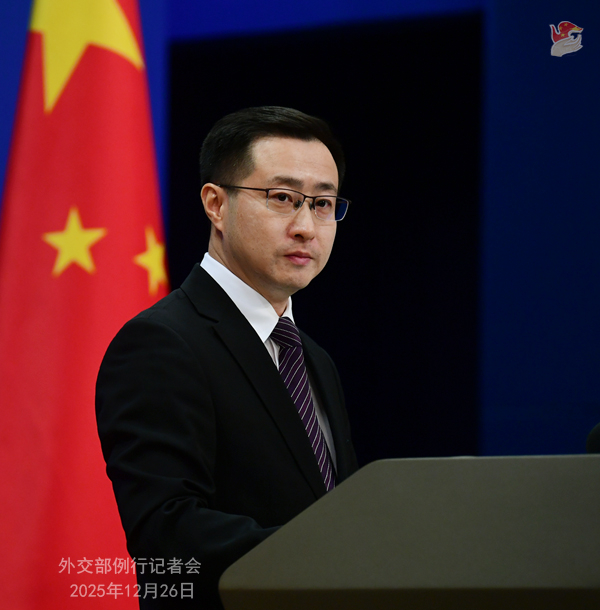
The move includes the freezing of American assets within China and a ban on entry into the country of the affected companies’ chief executives.
In a dramatic escalation of tensions surrounding the Taiwan Strait, the Chinese government on Friday December 26, 2025 announced a comprehensive set of countermeasures against 20 United States military-related companies and 10 of their senior executives. The move, which includes the freezing of assets within China and a ban on entry into the country, comes in direct response to recent large-scale U.S. arms sales to China’s Taiwan region.
Law On Countering Foreign Sanctions
The decision, published on the official website of the Chinese Ministry of Foreign Affairs and confirmed by state media, underscores the severity with which Beijing views the provision of U.S. weaponry to the island, which Beijing says is its sovereign territory. The measures were enacted pursuant to the Law of the People’s Republic of China on Countering Foreign Sanctions, marking a significant legal and diplomatic rebuke to Washington.
"The First Red Line"
At a press briefing in Beijing on December 26, 2025, Chinese Foreign Ministry spokesperson Lin Jian delivered a stern warning to the United States, characterizing the Taiwan question as the "very core of China’s core interests" and "the first red line that must not be crossed in China-U.S. relations."
"We stress once again that the Taiwan question is at the very core of China’s core interests and the first red line that must not be crossed in China-U.S. relations," Lin Jian stated. His remarks were forceful and unyielding, reflecting the heightened strategic competition between the world’s two largest economies. "Anyone who attempts to cross the line and make provocations on the Taiwan question will be met with China’s firm response."
Tangible Consequences Intended
The spokesperson emphasized that these countermeasures are not merely symbolic but are designed to inflict tangible consequences. "Any company or individual who engages in arms sales to Taiwan will pay the price for the wrongdoing," Lin Jian declared, addressing the assembled press corps. He further cautioned that no external force should underestimate Beijing’s determination. "No country or force shall ever underestimate the resolve, will and ability of the Chinese government and people to safeguard national sovereignty and territorial integrity."
Legal Basis Of Sanctions
The formal decision, as detailed by Xinhua News Agency, cites Articles 3, 4, 5, 6, 9 and 15 of the Anti-Foreign Sanctions Law. This legal framework allows Beijing to retaliate against actions it deems discriminatory or interfering in its internal affairs. The Ministry of Foreign Affairs’ statement accused the United States of seriously violating the One-China principle and the three China-U.S. joint communiqués, noting that the arms sales "interfered in China’s internal affairs, and undermined China’s sovereignty and territorial integrity."
Scope Of Sanctions
The sanctions target a broad spectrum of the U.S. defence industrial base, ranging from prime contractors to smaller, specialized technology firms. The list of 20 entities includes major industry players such as: Northrop Grumman Systems Corporation; L3Harris Maritime Services; Boeing in St. Louis (the defence division of the aerospace giant).
It also encompasses numerous smaller entities involved in niche defence technologies, including:
Red Cat Holdings, Inc. and its subsidiary Teal Drones, Inc.; ReconCraft; High Point Aerotechnologies; Dedrone Holdings Inc.; Rhombus Power Inc.; Epirus, Inc.; Area-I; Blue Force Technologies; and Dive Technologies. The rest are Vantor; Intelligent Epitaxy Technology, Inc.; Sierra Technical Services, Inc.; Gibbs & Cox, Inc.; Advanced Acoustic Concepts; VSE Corporation; and Lazarus Enterprises Inc.
Assets Freeze
For these companies, the Chinese government has mandated the freezing of all movable and immovable properties and other assets within China. Furthermore, "all organizations and individuals within China shall be prohibited from engaging in transaction, cooperation and other activities with them," effectively severing their business ties to the Chinese market.
Personal Sanctions
In a notable escalation, the sanctions also target individuals, moving beyond corporate entities to hold leadership personally accountable. Ten senior executives have been named in the "List of Targets of Countermeasures." These individuals face asset freezes similar to the companies and are prohibited from engaging in transactions with Chinese organizations. Additionally, they have been banned from entering China, including the Special Administrative Regions of Hong Kong and Macao.
Company Executives Sanctioned
The sanctioned execu...
Cet article complet est réservé aux abonnés
Déjà abonné ? Identifiez-vous >
Accédez en illimité à Cameroon Tribune Digital à partir de 26250 FCFA
Je M'abonne1 minute suffit pour vous abonner à Cameroon Tribune Digital !

- Votre numéro spécial cameroon-tribune en version numérique
- Des encarts
- Des appels d'offres exclusives
- D'avant-première (accès 24h avant la publication)
- Des éditions consultables sur tous supports (smartphone, tablettes, PC)









Commentaires