

Paid Forward: Jo Luck And Cameroon’s Perpetual Harvest
- Par Kimeng Hilton
- 29 Dec 2025 16:19
- 0 Likes
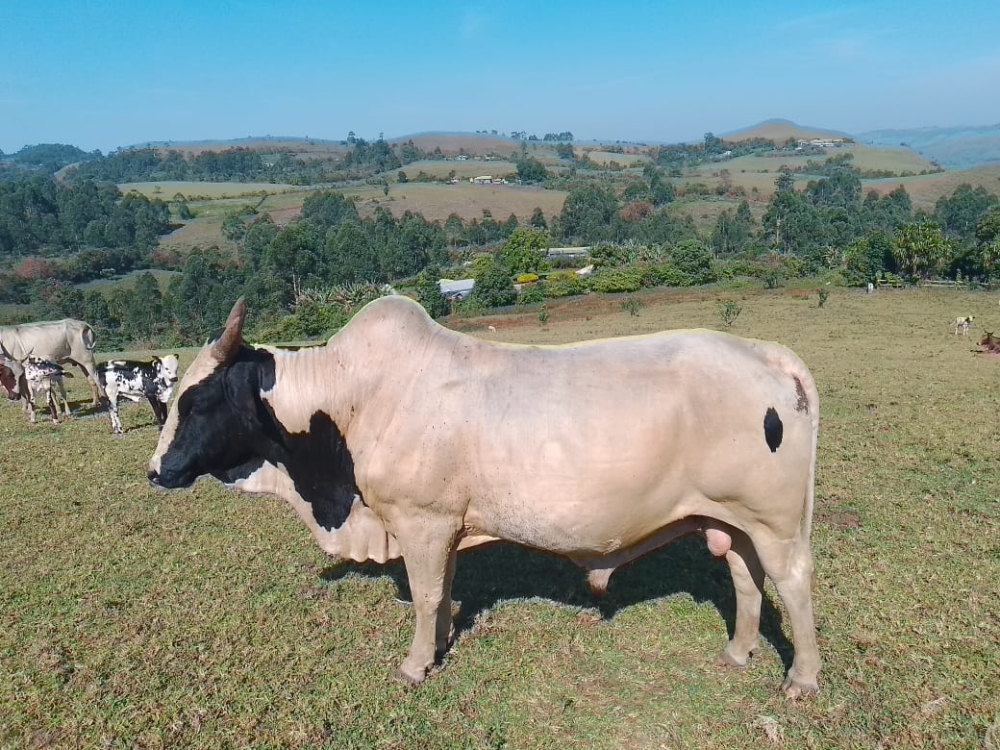
As the global community mourns former Heifer International President and CEO, her impact remains vibrantly alive in Cameroon, though the charity closed its doors a decade ago.
December 29, 2025, North West Region, Cameroon: The world of international development often speaks in statistics - budgets, metrics, and quarterly reports. But in the emerald hills of Cameroon’s North West Region, the legacy of Jo Luck, the late President and CEO of Heifer International, is measured in much more tangible ways: the curve of a Boran bull’s horn, the rhythmic spray of milk into a bucket, and the graduation gown of a young Mbororo woman.
As the global community mourns the passing of Jo Luck on November 26, 2025 in the U.S, her impact remains vibrantly alive in a country where Heifer International Cameroon officially closed its doors a decade ago.
The Education Of A Community
For Amidu Abdu, a 55-year-old farmer from Bainjong village in Boyo Division of Cameroon’s North West Region, the "Heifer era" was not just about livestock; it was an intellectual revolution. Before Heifer arrived, Abdu’s community of Mbororo people lived a largely nomadic life, where education was often secondary to the movement of herds.
"Heifer showed us the light of education," Abdu says. He credits the organization’s sensitization for his decision to break with tradition. Today, his daughter, Hure Hamidou, is a third-year Journalism student in the Advanced School of Mass Communication, ASMAC, University of Yaounde II, Yaounde, Cameroon. Six of her sisters follow in her footsteps, attending high school in the Cameroonian capital.
"Without education in today’s world, there is nothing you can achieve," Abdu reflects. For a man who married four wives and fathered 22 children - a choice he now attributes to a lack of early education - the success of his children is the ultimate "Gift" passed on from Heifer.
From Crossbreds To Gold: The Dairy Revolution
While the social impact was profound, the economic engine was the "Passing on the Gift" (POG) model. Mbu Peter Nji Anyang, a 50-year-old farmer from Kobenyang village, Momo Division of Cameroon’s North West Region, remembers exactly when the tide turned for Cameroonian dairy: the year 2000.
"It was then that purebred Holstein Friesians arrived in Cameroon through Heifer International," Anyang recalls. He describes a chance encounter at a security checkpoint near Bambui, near Bamenda, the North West regional capital, where he saw truckloads of the exotic animals being escorted by Dr. Henry Njakoi, the Heifer Project Coordinator for Mezam/Momo.
Before this, farmers struggled with lower-yielding Holstein Friesian crossbreds. "I had one cow producing 10 liters of milk a day on free range," Anyang explains. By studying the zero-grazing techniques promoted by Heifer and investing his own savings - sometimes paying up to 700,000 FCFA ($959 USD) for a single animal - Anyang transformed his farm into a high-yield operation that survived long after the NGO departed.
A Legacy Tested By Fire
The success of these farmers is even more remarkable given the "armed conflict" that has rocked the North West and South West Regions of Cameroon since 2016. The war has shuttered schools and decimated purebred herds.
"Because of the armed conflict... we no longer have purebred Borans. Only the crossbreeds are left," Abdu sighs. Y...
Cet article complet est réservé aux abonnés
Déjà abonné ? Identifiez-vous >
Accédez en illimité à Cameroon Tribune Digital à partir de 26250 FCFA
Je M'abonne1 minute suffit pour vous abonner à Cameroon Tribune Digital !

- Votre numéro spécial cameroon-tribune en version numérique
- Des encarts
- Des appels d'offres exclusives
- D'avant-première (accès 24h avant la publication)
- Des éditions consultables sur tous supports (smartphone, tablettes, PC)







Commentaires