

Interview: “We Respond To Our People's Most Urgent And Practical Needs”
- Par Kimeng Hilton
- 21 Apr 2026 10:09
- 0 Likes
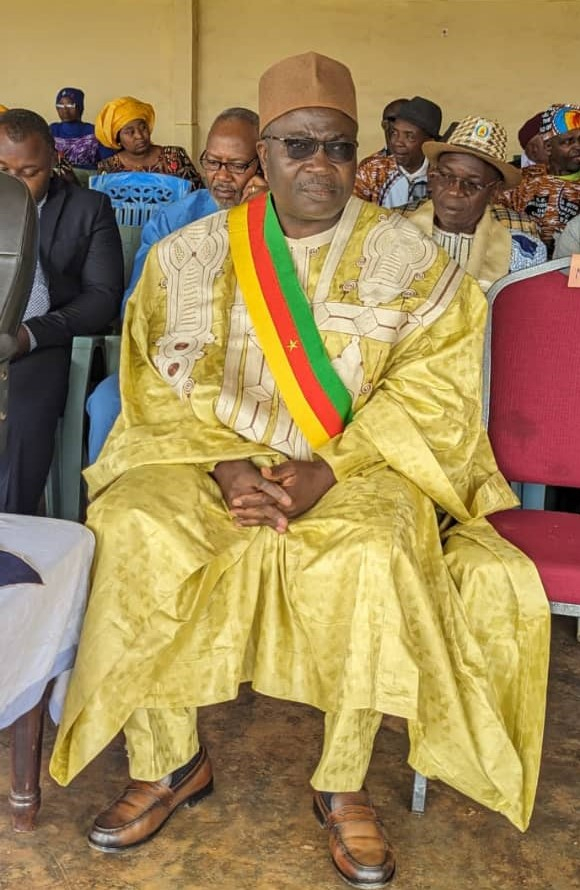
Abdou Kanfon Borno, Mayor of Ndu Council, Donga-Mantung Division of the North West Region, discusses his achievements in the past one year..
What were some of your key achievements of Ndu Council in the past one year?
Thank you very much for your kind words and for the interest you continue to show in the development efforts of Ndu Council. It is always a privilege to account to the population and to the national press on the work being carried out to improve the living standards of our people. Over the past year, our administration has remained focused on practical development, social inclusion, sanitation, infrastructure improvement, local economic recovery and institutional modernisation, despite the challenges confronting our municipality.
One of our most significant achievements in the past year has been in the area of hygiene, sanitation and environmental management. Ndu Council emerged as the cleanest council in the North West Region in the 2025 Clean City Competition, with a score of 1063.50 points out of 1200, representing 88.638 percent. At the national level, Ndu was ranked seventh in Cameroon, earning a prize of over FCFA 40 million.
This was the result of sustained weekly and monthly clean-up campaigns, the development of green spaces, beautification efforts and the active involvement of village and neighbourhood committees in mobilising the population around cleanliness and responsible civic behaviour. More so, to beef up hygiene and sanitation and ensure a healthy municipality, potable water supply schemes have been constructed notably the Wowo and Ngulu water supply schemes.
Were you able to win any recognition for such work?
Ndu Council was awarded first prize as the Most Disability-Inclusive Council in Cameroon. This national distinction reflects the work we have done to promote accessibility, equal opportunity, community outreach and the participation of persons with disabilities in local life. Our administration continuously ensures that civil status documents are issued according to State norms and in record time. In this light, Ndu Council was recognised in the “MyName” (or #MyName) challenge, a UNICEF-supported initiative partnering with the government (MINDDEVEL, BUNEC) to combat child invisibility, and guarantee legal identity through birth registrations.
Without roads, digitalization, there is no connectivity.
In terms of infrastructure and public works, our official council platform has highlighted interventions aimed at improving connectivity and service delivery, including the rehabilitation of the Ndu-Njiplvu-Mbipgo-Fuh link road, the delivery of a new bridge, the restoration of road access, construction of classrooms and supply of benches to GNS Mbiyeh, GS Mbadfung and the construction of a befitting council building. These efforts are important because they strengthen access to better education, mobility, open up communities and improve the conditions under which the population accesses markets, schools, farms and administrative services.
We have also advanced the cause of digital modernisation and transparency. Through participation in a digitisation capacity-building workshop organised by the Union of Cities and Councils of Cameroon, Ndu Council strengthened its digital communication efforts to better inform citizens, showcase local opportunities, promote tourism and economic potential and improve public access to information on council activities and services.
Why did you choose these projects, and what impact are they having on community people since their completion?
The projects were selected because they respond directly to the most urgent and practical needs of our people. In a municipality like Ndu, roads and bridges are not mere construction works; they are lifelines. They connect farmers to markets, patients to health facilities, children to schools and communities to administrative and economic opportunities. When roads are bad or bridges are lacking, the people suffer through higher transport costs, isolation, delays in accessing healthcare and reduced local trade.
Sanitation and environmental management were prioritised because a clean town is a healthier, more dignified and more economically attractive town. The impact has already been felt in the improved cleanliness of public spaces, stronger community mobilisation and a renewed sense of civic responsibility among the population. The clean city distinction has brought honour not only to the council administration, but to the entire population of Ndu because it reflects a shared effort.
Our focus on disability inclusion was equally deliberate. We believe development must benefit all citizens, including the most vulnerable. The impact of this policy has been to promote social cohesion, dignity, empathy and wider participation in community life. When a council becomes more inclusive, it does not only improve the lives of persons with disabilities; it strengthens the moral and social fabric of the entire municipality.
What else is your administration doing now for the people?
At the moment, our administration is continuing work in the priority domains of road infrastructure, potable water supply, local economic revitalisation, education support, transparency and youth empowerment. Under our development agenda, emphasis has been placed on opening and grading roads, rehabilitating tarred streets, constructing drainage structures, improving access to potable water, supporting schools, rehabilitating local facilities and promoting livelihood-oriented micro-projects.
We are also strengthening good governance and accountability. The Council has committed itself to open procurement procedures, quarterly progress reporting through Ndu Community Radio and the council website, the involvement of village and neighbourhood committees in project monitoring and the operation of a grievance redress mechanism so that complaints concerning delays, mismanagement or poor execution can be addressed transparently.
Beyond physical projects, we are equally working to consolidate social and economic recovery in the municipality. We have continued to encourage displaced sons and daughters of Ndu to return home and join in rebuilding the municipality. It is encouraging that businesses are gradually reopening, children are increasingly going back to school and more people are beginning to return with ideas and determination to contribute to local recovery.
And what plans do you have for the near future to continue to improve the living conditions of the people?
Looking ahead, our administration has identified a series of practical projects that will further improve the living conditions of our people. In the road sector, planned interventions include the opening of the Mbajeng-Njimnkang road, the construction of the Mbakfu-JMBC Field road, the grading of the Njipluh-Boyar road in Ndu town, the rehabilitation of tarred streets, the construction of V-shaped gutters at Mbarcourt, the opening of the Caritas Water Tank-Mbakfu Sub-Palace road and the construction of bridges on the Taku-Tamba and Mbipgo roads. These projects are intended to reduce isolation, facilitate movement and stimulate local commerce across the municipality. Some of these roads will be rehabilitated using the Human Intensive Labour Approach (HIMO), which is going to create job opportunities, especially to the youths.
In the area of water and public health, the council plans to intensify access to potable water through a new borehole with solar pump and storage tank at Ndu New Layout, maintenance of the borehole at the municipal grandstand and a major water supply project meant to serve Ntantalah, Wowo, Mbarse, Mbikoh and Mbajeng. Access to clean water remains a major determinant of health, dignity and quality of life, especially for women, children and vulnerable households.
On the social and economic front, we intend to strengthen education and livelihoods through the construction of classroom blocks in communities including Ngulu, Mankeng, Kumah Talla and Mbarse. The provision of didactic materials, the rehabilitation of CEAC Ntumbaw, a fish production micro-project in Ngarbuh using solar-controlled boreholes and continued support to Common Initiative Groups. These investments are designed to create opportunity, support young people, strengthen productivity and reduce hardship at the grassroots level.
Any last word, Sir?
Over the past year, our administration has been guided by a simple but firm conviction: local government must remain close to the people and must respond to their real needs with practical action. The recognitions we have received in sanitation and disability inclusion are very encouraging, but for us they are not ends in themselves. They are signs that even in a difficult environment, discipline, planning, transparency and community participation can produce meaningful results.
One of the greatest strengths of our administration has been the growing participation of the population through village and neighbourhood committees. This has enabled us to strengthen mobilisation, improve ...
Cet article complet est réservé aux abonnés
Déjà abonné ? Identifiez-vous >
Accédez en illimité à Cameroon Tribune Digital à partir de 26250 FCFA
Je M'abonne1 minute suffit pour vous abonner à Cameroon Tribune Digital !
- Votre numéro spécial cameroon-tribune en version numérique
- Des encarts
- Des appels d'offres exclusives
- D'avant-première (accès 24h avant la publication)
- Des éditions consultables sur tous supports (smartphone, tablettes, PC)





Commentaires