

4th National Population, Housing Census: Work Grounded As Enumerators Strike Over Unpaid Allowances
- Par Kimeng Hilton
- 23 May 2026 15:32
- 0 Likes
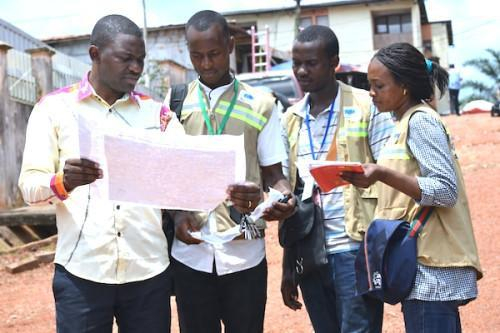
Thousands of field enumerators have laid down their tablets and badges, launching sporadic strikes across major urban hubs, including Douala and Yaoundé.
Cameroon's long-awaited Fourth General Population and Housing Census, GPHC - the country’s first comprehensive count in over 21 years - has run into a major roadblock just days before its scheduled completion. Thousands of field enumerators have laid down their tablets and badges, launching sporadic strikes across major urban hubs, including Douala and Yaoundé. Over unpaid training and field allowances.
To End May 29, 2026
The ambitious counting exercise, which combined the national population registry update with a comprehensive agricultural and livestock survey, was launched with immense state backing on April 24, 2026. And was slated to conclude on May 29, 2026. However, field operations have ground to a sudden halt. Over 355,000 enumerators were recruited for the census, Cameroon’s fourth after 1976, 1987 and 2005.
Discontent Over "Broken Promises"
The strike gained visibility following open protests in the Douala III municipality, where angry census agents took to the streets to denounce the National Institute of Statistics, INS and the Ministry of Economic Planning.
According to protest representatives, the government promised initial stipends for the rigorous multi-week training phase. Followed by field deployment allowances to cover transportation, internet data, and daily feeding. Instead, many agents claim they have been working on empty pockets, paying for transport out of their own pockets to reach remote and difficult neighborhoods.
Their Grievance
"We are being asked to provide pristine data for the state’s development strategy while we starve on the ground," one striking enumerator in Douala told local news channels. "They gave us tablets, but no money for water or transport. We will not hand over the data logs until our accounts show we’ve been paid."
Incredibly High Stakes
The timing of this labor dispute could not be worse for Cameroon. The country's last official census was conducted in 2005, putting the current national statistics over two decades out of date. Current projections estimate Cameroon’s population at over 30.6 million people, but the government desperately needs precise data to guide public policy, address infrastructural demands, and steer the country's National Development Strategy (SND30).
Furthermore, the 2026 exercise had been praised for its technological innovation, utilizing reconfigured smartphones, satellite imagery, and hybrid mapping to safely count populations in volatile crisis zones within the Far North, North West, and South West Regions.
Compromised Timeframe
With data collection severely disrupted, authorities are facing a logistical nightmare. If the standoff isn't resolved immediately, the validity of the data could be compromised. And the timeline for publishing results - originally promised within five months - will almost certainly slip. Government spokespersons have urged the youth-dominated workforce to remain patriotic and return to the field, promising that the administrative bottlenecks delaying the funds are being actively cleared.
Cameroo...
Cet article complet est réservé aux abonnés
Déjà abonné ? Identifiez-vous >
Accédez en illimité à Cameroon Tribune Digital à partir de 26250 FCFA
Je M'abonne1 minute suffit pour vous abonner à Cameroon Tribune Digital !

- Votre numéro spécial cameroon-tribune en version numérique
- Des encarts
- Des appels d'offres exclusives
- D'avant-première (accès 24h avant la publication)
- Des éditions consultables sur tous supports (smartphone, tablettes, PC)


Reactions
De la meme catégorie

Vol de mototaxis: Interpellés grâce au Gps
- 13 Oct 2026 12:13
- 0 likes







Commentaires