

CPDM In Kupe-Muanenguba: Party Structures Consolidated Across The Division
- Par Kimeng Hilton
- 23 May 2026 17:42
- 0 Likes
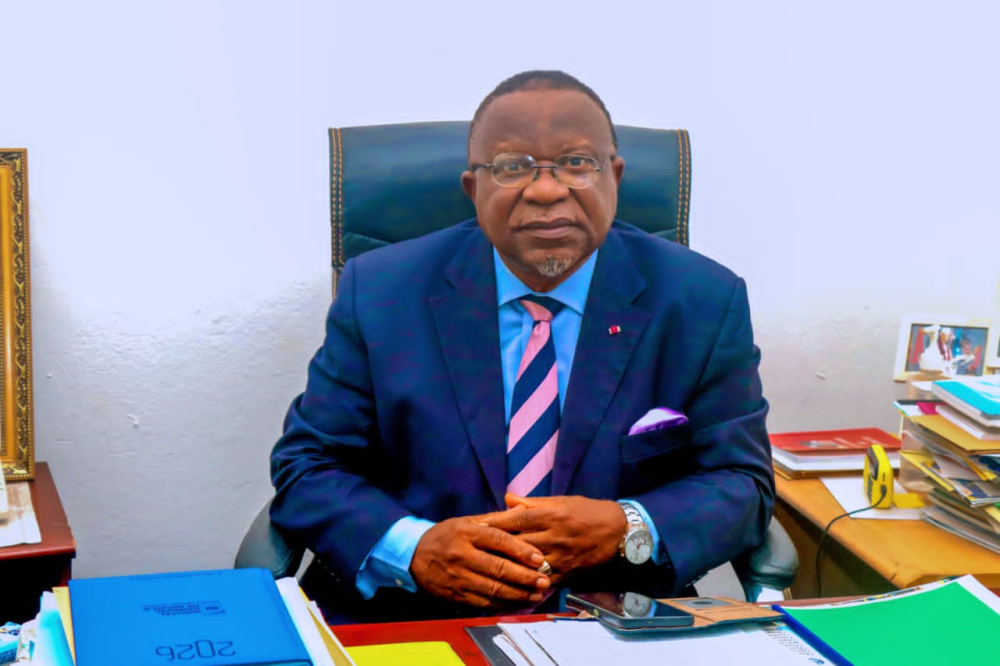
Local elite like Prof. Elvis Ngole Ngole are working hard to ensure the party maintains its leadership position in the division in forthcoming elections.
Kupe-Muanenguba Division - and specifically Tombel Sub-division - stands as a critical stronghold for the ruling Cameroon People’s Democratic Movement, CPDM in the South West Region. While the region has faced intense socio-political challenges due to the ongoing Anglophone crisis, the CPDM has maintained its dominance through a sophisticated blend of traditional authority, local elite networks, and targeted state development interventions.
Prof. Elvis Ngole Ngole is one of such local elite, and also a household name in Cameroon politics. A veteran political scientist and former Minister of Forestry and Wildlife, Professor Ngole Ngole has transitioned his academic background into a full-time, institutional engine for the ruling Cameroon People’s Democratic Movement, CPDM.
Operating out of the party's National Secretariat in Yaoundé, his current role as the head of the CPDM Academy positions him as a central figure tasked with shaping the ruling party's ideological framework, modernizing its communication strategies, and fortifying its grassroots support ahead of future electoral cycles. To journalists, Prof. Ngole Ngole is a ready source for interviews, explaining and analyzing both national and international happenings; and CPDM activities, using his vast knowledge in Political Science.
While his weekly duties keep him tethered to the capital's Secretariat, his true political weight is anchored in his hometown base of Ndom-Kack, in the Kupe-Muanenguba Division of South West Region. In the wake of complex socio-political challenges stemming from the ongoing Anglophone crisis, Tombel Subdivision faced severe infrastructural and social disruptions. But Ngole Ngole has deployed a strategy of persistent, low-profile civic engagement to rebuild broken societal trust among grassroots militants.
"Durable peace and sustainable party loyalty cannot be mandated from above," local community leaders note. "They are built when citizens see themselves as active co-authors of their own security and community progress." By leveraging his local legitimacy, Professor Ngole Ngole has consistently brought together an inclusive coalition of grassroots stakeholders to restore basic community normalcy.
At the national level, Professor Ngole Ngole’s has contributed in revitalizing the CPDM National Secretariat. Under his direction, the institution has become a structured space for policy analysis, civic ethics, and political training. His curriculum at the Academy prioritizes public policy design and technical implementation tools. Conflict-sensitive communication tailored to regional diversities. And civic mobilization designed to re-engage disillusioned CPDM youth militants in both urban hubs and rural zones. By training the next generation of party cadres, the CPDM is building an institutional memory bank. Blending loyalty to the Head of State, His Excellency President Paul Biya, with modern technocratic governance standards.
As the CPDM looks toward its future horizons, political analysts view Ngole Ngole not merely as a loyal party functionary, but as a reliable, highly competent technocrat. For militants and the broader public alike, his trajectory remains a clear case study in how deep loyalty to state institutions, when married to intellectual rigor, can be effectively channeled into national peace and development.
While his weekly duties keep him tethered to the capital's Secretariat, his true political weight is anchored in his hometown base of Ndom-Kack, in the Kupe-Muanenguba Division ...
Cet article complet est réservé aux abonnés
Déjà abonné ? Identifiez-vous >
Accédez en illimité à Cameroon Tribune Digital à partir de 26250 FCFA
Je M'abonne1 minute suffit pour vous abonner à Cameroon Tribune Digital !

- Votre numéro spécial cameroon-tribune en version numérique
- Des encarts
- Des appels d'offres exclusives
- D'avant-première (accès 24h avant la publication)
- Des éditions consultables sur tous supports (smartphone, tablettes, PC)







Commentaires